


Predictive Lead Scoring: How the Models Work
How predictive models learn from won and lost deals, what data they need, how to test them and when rules work better.
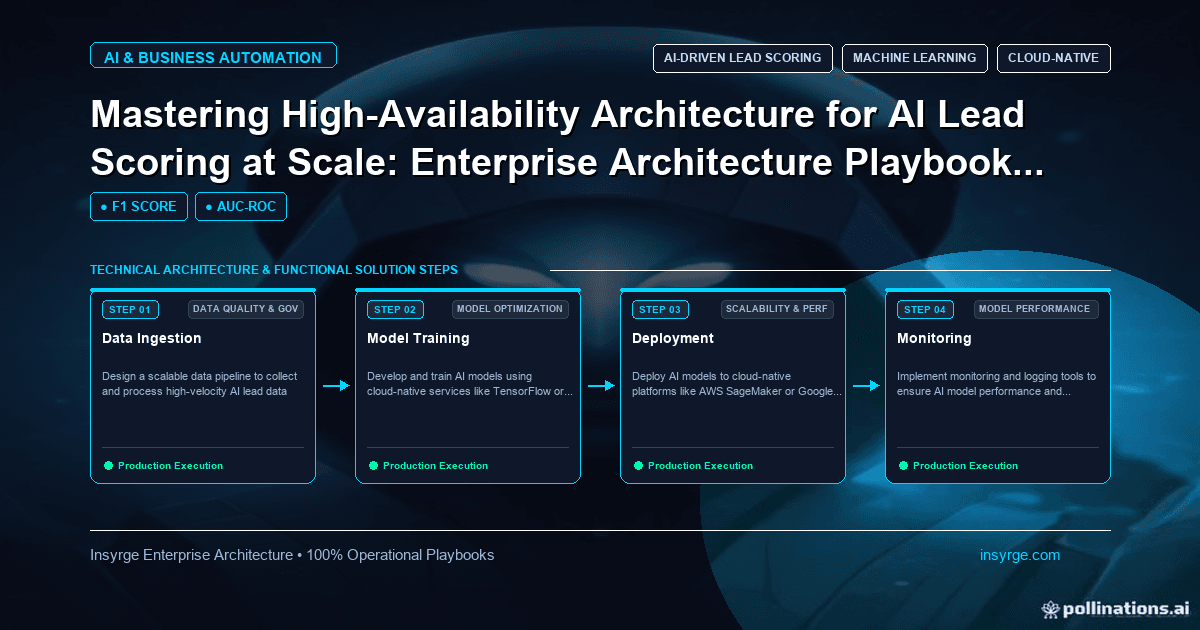
Understand predictive lead scoring: how models learn from past deals, the data and volume they need, how to test them fairly and when rules are better.
Most lead scoring starts with rules: points for a target industry, points for a demo request, points off for a competitor's email domain. Predictive lead scoring takes a different route. Instead of people deciding the weights, a model studies past leads, compares the ones that became customers with the ones that did not, and learns which patterns matter. Done well, it can pick up combinations that nobody would think to write as a rule. Done badly, it produces confident numbers that nobody can explain and that quietly stop matching reality. This guide explains how predictive models work, what data they need, how to test them honestly and when a rule-based model is still the better choice.
 How predictive lead scoring works
A predictive model treats lead scoring as a classification problem. Each past lead is an example with two parts:
- Features: what was known about the lead at the time, such as company size, industry, role, source, pages visited and emails answered
- Outcome: what happened next, usually whether the lead became an opportunity or a customer within a set period
The model is trained on thousands of these examples and learns how strongly each feature, and each combination of features, is linked to a good outcome. When a new lead arrives, the model looks at its features and returns a probability or a score. Common model types range from logistic regression, which is simple and easy to explain, to tree-based methods such as gradient boosting, which can capture more complex patterns but are harder to interpret.
The score is only as good as the examples. If the history is small, biased or recorded inconsistently, the model learns those problems too.
What a predictive model needs
Before choosing a tool, check whether you have the raw material:
- Enough outcomes: the model needs a meaningful number of converted leads, not just a large number of leads. A few dozen wins spread over many segments is rarely enough to learn reliable patterns.
- Consistent outcomes: "converted" must mean the same thing across the whole history. If the definition of a qualified opportunity changed last year, older records may need relabelling.
- Features captured at the right time: each feature must reflect what was known when the lead would have been scored, not what was added later.
- Stable processes: if your market, product or sales process has changed sharply, older history may describe a business that no longer exists.
Our guide to AI lead scoring covers the wider set-up, from data preparation to routing scored leads.
Avoid data leakage
The most common reason a predictive model looks brilliant in testing and disappoints in production is data leakage. The scikit-learn documentation on common pitfalls describes it as using information that would not be available at prediction time when building the model, which produces overly optimistic performance estimates.
In lead scoring, leakage usually hides in CRM fields that are filled in after a lead progresses:
- A "deal amount" field that only sales fills in once there is a real opportunity
- A "meeting held" flag or a count of sales calls
- Lead status values such as "Qualified" or "Contacted"
- Fields updated by the sales team during negotiation
If any of these are features, the model learns that "leads with a deal amount convert", which is true and useless. Build the training set from snapshots of what each lead looked like when it first entered, or when it would normally be scored, and exclude fields that sales fills in later.
Test the model fairly
A model should be judged on leads it has never seen. A simple, honest approach:
- Train on older leads and test on the most recent period, so the test mimics real use
- Compare the model with your current rules or with no scoring at all, not just with a perfect score
- Look at conversion rates by score band: the top band should convert far better than the bottom one
- Check the share of eventual customers that land in the top bands, because a model that hides half of your wins in a low band is costly
Accuracy on its own can mislead. Google's machine learning course on accuracy, precision and recall notes that for heavily imbalanced datasets, a model that always predicts the majority class can score high accuracy while being useless. Since most leads never convert, lead scoring is exactly this kind of problem.
Worked example: comparing a rules model and a predictive model
The table below shows a hypothetical test on the most recent quarter of leads, with both models scoring the same leads. All figures are illustrative, not results from a real client.
Score bandLeads (rules)Conversion (rules)Leads (predictive)Conversion (predictive)Top 10%3009%30014%Next 20%6005%6006%Middle 40%1,2002%1,2002%Bottom 30%9001%9000.5%
In this example, the predictive model concentrates more conversions in the top band and pushes fewer into the bottom band. The next questions would be whether that gain holds over another quarter, whether sales can understand why leads score high, and whether the improvement is large enough to justify maintaining a model.
Make scores explainable
Salespeople ignore scores they cannot understand. Whatever the model type, give each score a short explanation:
- The top few factors that raised or lowered this lead's score
- A plain-language label, such as "strong fit, recent pricing interest"
- A link to how the model works and when it was last checked
Simpler models make this easier. A logistic regression's weights can be read directly, while more complex models need explanation methods that estimate each feature's contribution. If two models perform similarly, choose the one sales can understand.
When rules are the better choice
Predictive scoring is not always the right step. Rules usually work better when:
- You have too few conversions to train on
- Your offer or target market changed recently
- You need sales to trust the model quickly and transparently
- The signals that matter are already obvious, such as demo requests from target accounts
Many teams start with a rules model based on clear lead scoring criteria, collect clean outcome data for a few quarters, and only then test a predictive model against it.
Keep the model current
A model trained once will drift as markets, campaigns and products change. Plan for:
- A scheduled retrain, for example each quarter, using the latest outcomes
- Monitoring of conversion by score band, with an alert if the top band stops outperforming
- A record of each model version, its training period and its test results
- A fallback to the rules model if the predictive service is unavailable
Frequently Asked Questions
What is predictive lead scoring?
It uses a statistical or machine learning model trained on past leads and their outcomes to estimate how likely a new lead is to convert, instead of relying on hand-set points.
How much data does predictive lead scoring need?
There is no single number, but you need enough converted leads, recorded consistently, for the model to learn patterns in each important segment. Small or inconsistent histories favour rules.
What is data leakage in lead scoring?
It is when the model learns from information that is only known after a lead progresses, such as deal amounts or meeting flags, which makes test results look far better than real use.
Is predictive scoring better than rule-based scoring?
Not always. It can find patterns rules miss, but it needs clean history and explanation. Test it against your current rules on recent leads before switching.
Build a scoring model you can trust
We assess whether your CRM data can support predictive scoring, build and test models against your current rules and set up explanations and monitoring. See our AI automation solutions, or talk to us about predictive scoring.
About the Author
Manav Sharma is the founder of Insyrge and a CRM solutions architect. He works across Zoho, Salesforce, HubSpot, Odoo and more, designing the CRM setups, integrations and automations that keep sales and operations teams working from the same data.
Need Help Implementing This in Your Business?
Our certified Zoho consultants and automation experts can help you design and deploy custom workflows tailored to your operations.
Book Free Consultation